How a blood draw actually works, start to finish
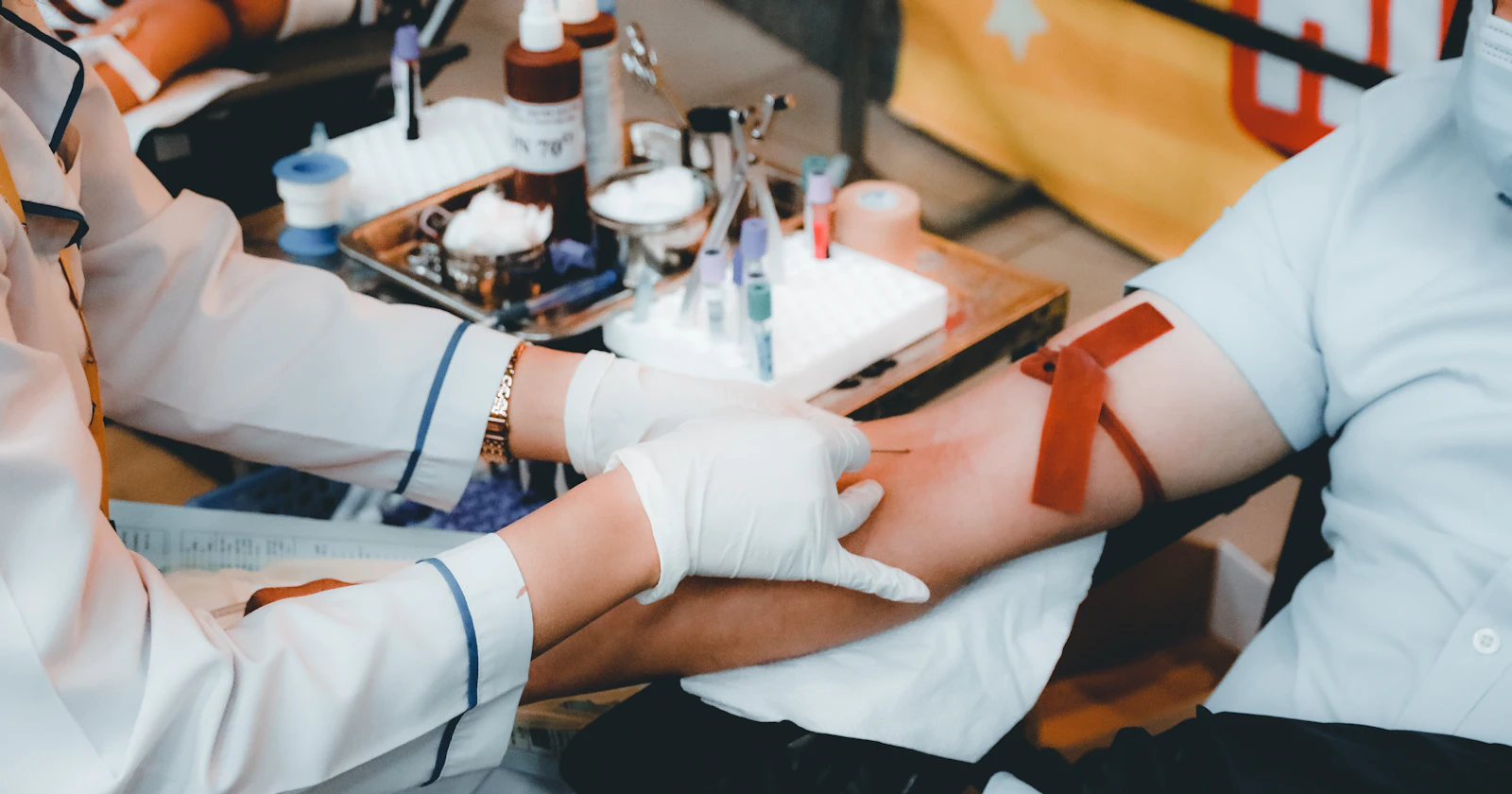
A routine blood draw takes about five minutes and collects one to a few small tubes, usually 10 to 30 mL in total, a fraction of what a blood donation takes. A phlebotomist finds a vein in the crook of your elbow, fills the tubes the requisition calls for, and sends them to the laboratory. The draw is identical no matter which service you ordered the test through.
What actually happens during a blood draw?
You sit down, roll up a sleeve, and a phlebotomist puts an elastic tourniquet around your upper arm to make the veins easier to find. They clean a patch of skin with an alcohol wipe, insert a thin needle into a vein (usually in the crook of the elbow, where the veins sit close to the surface) and attach one or more vacuum tubes that fill on their own. The tourniquet comes off, the needle comes out, and you hold a folded gauze pad over the site while they label the tubes.
The needle is in your arm for well under a minute in most cases. Everything else is setup and paperwork.
How long does a blood draw take?
Around five minutes from sitting down to standing up, with most of that spent checking your ID against the requisition and labeling tubes. Appointments run longer than the procedure, so plan for the wait, not the draw.
How much blood is actually taken?
A single tube holds roughly 2 to 6 mL. A typical requisition fills one to four tubes, so most draws collect somewhere between 10 and 30 mL, about two tablespoons at the high end.
For scale, a standard blood donation takes around 470 mL, and an adult's total blood volume is roughly 4.5 to 5.5 liters. A routine diagnostic draw is a very small fraction of that, which is why you can eat, drive and go back to work immediately afterward.
Why are there different colored tube caps?
Each color is a different additive, and the additive determines what the lab can measure from that tube. It isn't decoration: putting blood in the wrong tube ruins the sample.
| Cap color | What's inside | Commonly used for |
|---|---|---|
| Lavender | EDTA (stops clotting, preserves cells) | Complete blood count |
| Gold or red | Clot activator, often with separator gel | Chemistry panels, lipids, hormones, vitamin levels |
| Light green | Lithium heparin with separator gel | Many chemistry tests |
| Light blue | Sodium citrate | Clotting studies |
| Gray | Fluoride and oxalate (stops glucose breaking down) | Glucose, lactate |
This is also why one draw can cover several unrelated tests: the phlebotomist simply fills the tubes those tests need, from the same needle stick.
What happens to your blood after the draw?
The labeled tubes are batched and couriered to a laboratory, usually a regional processing facility rather than the building you visited. Most are spun in a centrifuge to separate serum or plasma from the cells, then loaded onto analyzers that run the specific assays your requisition ordered.
Routine results are commonly back within one to three business days. Specialized assays take longer, including anything sent to a reference laboratory and tests that require a culture or mass spectrometry.
Does a blood draw hurt?
Most people describe a brief sharp scratch as the needle goes in, and nothing much after that. Some bruising at the site over the following days is common and harmless.
A small number of people feel light-headed or faint during or shortly after a draw. If that's you, say so before they start. Phlebotomists deal with it constantly, and having you lie down instead of sit up is a routine adjustment, not a fuss.
How can you make a blood draw go smoothly?
- Drink water beforehand unless you've been told to fast from fluids too. Well-hydrated veins are easier to find.
- Bring photo ID and your requisition, printed or on your phone.
- Wear a top with sleeves that push up easily above the elbow.
- Tell the phlebotomist if you've fainted at a draw before, or if one arm is off-limits (for example after lymph node surgery on that side).
- Keep the gauze pressed on for a few minutes afterward, and leave the bandage on for an hour or so.
Do you need a doctor's order for a blood draw?
A laboratory needs an order from a licensed provider before it will run a test, but that order doesn't have to come from your own doctor. Self-pay ordering services have a physician sign the requisition as part of the purchase, and a few states restrict this. Ordering your own blood work without a doctor covers how that works and where it isn't available.
If you already have an order from your own clinician, you can usually take that to a patient service center directly instead.
Sources
- Blood Tests (National Heart, Lung, and Blood Institute, NIH)
- Laboratory Tests (MedlinePlus, National Library of Medicine)
- How to Understand Your Lab Results (MedlinePlus)
Common questions
How long does a blood draw take?
About five minutes from sitting down to standing up. The needle itself is usually in your arm for less than a minute; the rest is identity checks and labeling tubes.
How much blood is taken for a blood test?
Typically 10 to 30 mL across one to four tubes, roughly two tablespoons at most. A blood donation takes around 470 mL by comparison.
Can you drive after having blood drawn?
Yes, for a routine diagnostic draw. The volume taken is small enough that most people feel nothing. If you tend to feel faint, sit for a few minutes before leaving.
Why did they take several tubes for one test?
Different tests need different preservatives, and each tube contains only one. Several tubes from a single needle stick is normal, and does not mean several separate draws.
How long do blood test results take?
Routine results are commonly available in one to three business days. Specialized assays sent to a reference laboratory take longer.