What Do TSH, T3, and T4 Mean on a Thyroid Panel?
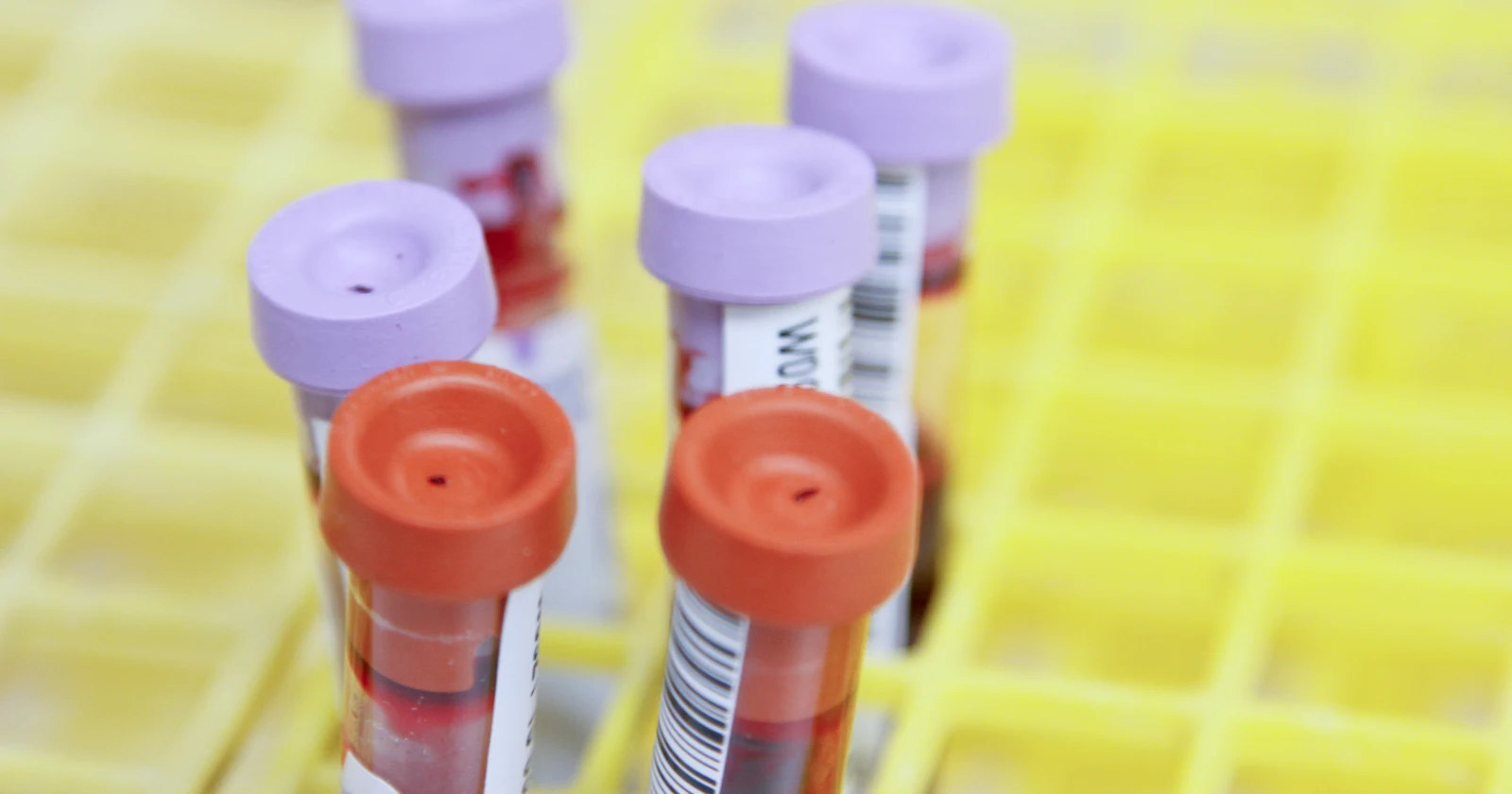
A thyroid panel usually reports three things: TSH, a signal from your pituitary gland, and T4 and T3, the two hormones the thyroid actually makes. TSH tells the thyroid how hard to work, so it often shifts before the hormone levels do. Read together, the three numbers show whether the gland and its control signal are in step.
How do TSH, T3, and T4 work together?
The three numbers describe one control loop, not three separate glands. Your pituitary, a small gland at the base of the brain, releases TSH (thyroid stimulating hormone) as an instruction. TSH tells the thyroid in your neck to produce T4 and, in smaller amounts, T3. Those hormones set the pace of many body processes, including how fast you burn energy.
The loop runs on feedback. When circulating thyroid hormone is low, the pituitary raises TSH to push the gland harder. When hormone is plentiful, the pituitary eases off and TSH drops. That inverse relationship is why a high TSH and a low T4 tend to point the same direction, and why the two numbers moving in opposite directions is normal rather than contradictory.
What does each number measure?
| Marker | What it is | Made by |
|---|---|---|
| TSH | The signal telling the thyroid how hard to work | Pituitary gland |
| T4 (thyroxine) | The main hormone the thyroid releases, mostly a reserve form | Thyroid gland |
| T3 (triiodothyronine) | The more active hormone; most of it is converted from T4 in tissues | Thyroid gland and body tissues |
T4 is produced in far larger quantity than T3, but T4 is relatively inactive until the body converts it to T3. Think of T4 as stock on the shelf and T3 as the version actually put to work. This is why a panel may include T4, Free and T3, Free alongside TSH.
Why is TSH usually the first number to move?
TSH tends to shift before T4 and T3 fall outside their ranges because the pituitary reacts to small changes in hormone supply. A gland that is starting to underperform gets a louder instruction, so TSH climbs while T4 may still read within its range for a while. That sensitivity is the reason TSH is often the single thyroid test ordered first, and why it appears on general checkup panels. The baseline-panel article covers why TSH earns a spot on a standard checkup.
What is the difference between free and total T4 or T3?
Most thyroid hormone in your blood is bound to carrier proteins and is not available to tissues; only the small unbound fraction is active. A free T4 or T3 measures that unbound portion. A total measurement counts both bound and unbound hormone together, so it can be pushed around by conditions and states that change carrier-protein levels, such as pregnancy. Free measurements are less affected by those swings, which is why panels frequently report free T4 and free T3.
Where do thyroid antibodies fit in?
TSH, T4 and T3 describe how the thyroid is functioning right now. They do not explain *why* it is behaving that way. Thyroid Peroxidase Antibodies look for an immune attack on the gland, a common reason function drifts over time. The distinction between function tests and antibody tests is spelled out in what blood tests relate to autoimmune conditions.
What do thyroid panels cost self-pay?
| Test | Cheapest | Highest | Services |
|---|---|---|---|
| Thyroid Peroxidase Antibodies | $4.90 | $119.00 | 17 |
| Thyroid Stimulating Hormone (TSH) | $4.92 | $59.00 | 18 |
| T4, Free | $5.52 | $89.00 | 17 |
| T3, Free | $9.83 | $99.00 | 17 |
Ordering the four markers separately is not always the same price as a bundled panel, and each ordering service prices them differently. TSH on its own is usually the cheapest of the group, since it is the most commonly run. For how self-pay ordering works in general, see how to get blood tests without insurance.
How are the ranges set?
Reference ranges for TSH, T4 and T3 are not universal numbers. They vary by the laboratory that runs the test, by the assay method, and by sex and age, and they can differ during pregnancy. A result flagged outside the range at one lab may sit inside another lab's range. Because of that, results are most useful read against the same lab's range and, over time, against your own earlier draws rather than a fixed cutoff.
Do you need to fast for a thyroid panel?
Thyroid tests do not generally require fasting, though the time of day a sample is drawn can nudge TSH slightly. If a thyroid panel is combined with tests that do need an empty stomach, such as glucose or a lipid panel, the fasting rule for those governs the visit. See do you need to fast before a blood test.
Sources
- Thyroid Tests (MedlinePlus)
- TSH (Thyroid-Stimulating Hormone) Test (MedlinePlus)
- Thyroid Hormones (NIH MedlinePlus Genetics)
Common questions
What is the difference between TSH and T4?
TSH is a signal from the pituitary gland telling the thyroid how hard to work, while T4 is a hormone the thyroid actually produces. They usually move in opposite directions within the feedback loop.
Why is T3 called the active thyroid hormone?
Most T4 is a reserve form that the body converts into T3 in the tissues, and T3 is the version that drives cellular activity. That is why some panels measure both.
What does free T4 mean compared to total T4?
Free T4 measures only the unbound hormone available to tissues, while total T4 counts both bound and unbound hormone. Free measurements are less affected by changes in carrier proteins.
Do thyroid antibody tests measure thyroid function?
No. Antibody tests like thyroid peroxidase antibodies look for an immune reaction against the gland, whereas TSH, T4 and T3 show how the thyroid is functioning at the moment.
Do I need to fast before a thyroid blood test?
Thyroid tests generally do not require fasting, but if they are drawn alongside glucose or a lipid panel, the fasting rule for those tests applies to the whole visit.
Why can the same result be flagged normal at one lab and high at another?
Reference ranges vary by laboratory, assay method, sex and age. A number is best read against the range printed by the lab that ran it.